

Specialized Dacor Appliance Repair in Los Angeles and Orange County
Dacor oven not maintaining temperature? Use this model-aware guide to narrow the likely cause, try safe external checks, and know when the problem needs professional diagnosis.
A Dacor oven that will not hold temperature most often comes down to what the door seal, the sensor reading, or the heating cycle is doing, so start with a closed-door thermometer test rather than a new setting. If the thermometer and the display disagree after a full cycle, or a sensor code appears, book a wall-oven visit instead of adjusting further.
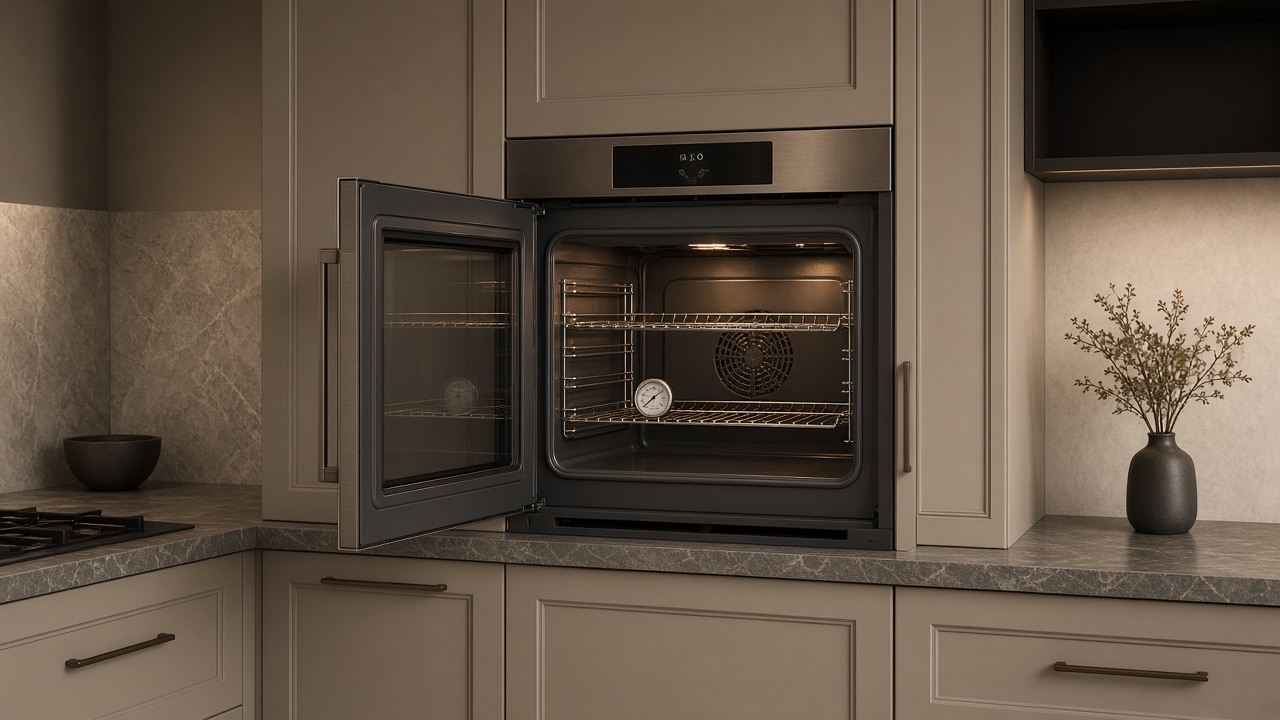
A Dacor oven not maintaining temperature preheats, then drifts. That is a sensor, gasket, or cycling-relay story more often than a “weak element.” Place a known oven thermometer on the center rack and watch a full cycle, not the first two minutes.
Wide swings after preheat point at cycling. A steady offset (always 40° low) can be calibration or a sensor that is in spec but wrong. Do not recalibrate over a torn gasket. Confirm Modernist versus Discovery before you use a service offset from another family.
| Symptom | What it can point to | What you can check |
|---|---|---|
| Always the same amount too hot or too cold | A calibration offset, or a sensor that reads steadily wrong | Compare an oven thermometer with the display, and look at whether a temperature adjustment was set earlier |
| Swings up and down within one bake | Heating cycling, a sensor reading that wanders, or a door that is not sealing | Watch a full cycle with the door closed and note when the swing happens |
| Food browns on one side only | Rack position, pan placement or convection behavior | Move the rack to the level the recipe calls for and bake once with one pan |
| Display shows a sensor code | A temperature-sensing fault | Write the exact characters and the model family before anything else |
One test is more useful than five tiny adjustments. Write the numbers down for the technician. Run that test in one mode only, so you can tell a technician exactly which mode drifted.
On the Modernist wall oven manual, the oven temperature is calibrated at the factory. Owners can shift it up or down by 35 F through the Settings menu under Temp, then Temperature Adjust. That adjustment does not change broil or self-clean temperatures, and it is kept after a power failure.
Two things follow from that. First, a steady offset is the one symptom an owner can address through a documented setting, and only after the door seal and the thermometer test come out clean. Second, an offset applied long ago and forgotten can look exactly like a failing oven, so check the setting before assuming a part has failed.
The same manual says to preheat for baking, with five minutes cited for several convection modes, and describes an InstantHeat mode that is used without preheating. A first reading taken in the wrong mode, or before preheat has finished, will mislead you. Check your own model’s manual for which modes apply.
None of those is confirmed by the symptom alone. Wiring, connectors, restrictions, and the control can produce the same kitchen experience as a failed part.
Not every wobble is a defect. The manual lists the convection fan cycling on and off during baking as normal, and steam coming from the vent during convection baking is normal too. Neither means the oven has lost control of its temperature.
The door gasket matters here, and the manual says not to clean it because it is essential for a good seal. If the corners look flattened or worn, treat that as a service finding rather than a cleaning job. A bad seal can make a good oven read low at the far end of a long bake.
Codes are more informative than feel. The wall-oven manual lists C-20 and C-23 as oven sensor open or short codes, and C-21 and C-31 as high-temperature codes. For several of them it says to call for service, so a code is a reason to book, not to keep adjusting.
A thermometer reading is evidence about the cavity, not a diagnosis. If it matches the display after a long closed-door cycle, the oven is probably holding its setpoint and the problem may be rack position or pan choice. If it does not match, you have learned the oven is off but not why.
The result also depends on the mode. Conventional bake and convection can behave differently, so test one mode at a time and keep the same rack. Mixing modes in one test makes the numbers hard to read.
Model family matters here. The article already warns against using a setting from another family, and the menu path described above comes from one Modernist manual, so confirm it against your own.
Book wall-oven repair if the thermometer disagrees with the display after a closed-door test, if food burns then undercooks in the same session, or if a sensor code appears.
On the Modernist wall-oven manual there is a temperature adjustment in the settings menu, which is the only owner-level change it describes. Use it only after a thermometer test and a look at the gasket. Anything inside the oven or behind a panel is service work.
Preheat tells you the oven reached its target once, not that it holds it. A worn door seal, a sensor reading that wanders, or heating that cycles unevenly all show up later in a long bake. That is why the brief suggests watching a full cycle.
It can. The manual describes an energy saving option that, when enabled, shuts the oven off after 12 hours in baking functions or 3 hours in broil. If food stops cooking at a very long time, check whether that setting is on.
Only after a gasket and sensor check. Calibration will not fix a torn seal.
Small cycling is normal. Collapses of 75° after preheat are not.
Restriction can, on models that use one. It is a check, not a parts order.
Usually a separate circuit. Mention it if both misbehave.
Share a few details and we’ll confirm an appointment. Prefer to talk? Call us and we’ll help right away.
Fields marked with * are required.